In this article
- Step 1: Decide between a legal wedding abroad and a symbolic one
- Step 2: Check the law in the country you have in mind
- For British couples: documents and recognition
- For French couples: the certificat de capacité à mariage
- Marrying at home first: what it involves
- Why Morocco works for couples who marry at home
- The checklist
- FAQ
- Planning your wedding in Marrakech
Most couples planning a wedding abroad start with the venue. It's easier to start with a plainer question: where will you be legally married? The answer decides your paperwork, the order you do things in, and which documents you'll need to chase.
This checklist sets out the rules for British and French citizens, taken from GOV.UK, France Diplomatie and Service-Public. It also covers the practical side (insurance, guests, flights) and explains why most of the couples we plan for sign the legal papers at home and celebrate in Marrakech.
Step 1: Decide between a legal wedding abroad and a symbolic one
You can get married abroad in one of two ways. Either you marry legally in the destination country, or you marry legally at home and hold a symbolic ceremony abroad.
A legal wedding abroad follows the other country's procedure. That usually means proof that you're free to marry, official translations, and a local official to conduct the ceremony.
A symbolic ceremony has the vows, the setting, the guests and the party, without the legal act. The legal part happens at your register office or mairie, before or after the trip. Everything else on this checklist depends on which route you take.
Step 2: Check the law in the country you have in mind
GOV.UK's advice to British nationals is direct: "You need to check the laws in the country where you want to marry." Find out whether you're allowed to marry there, how the process works, and which documents prove you're free to marry (GOV.UK).
The same page lists the usual reasons a couple can't marry in a given country:
- neither of you is a national of that country, or you don't meet its residency rules
- same-sex unions aren't recognised there
- you don't meet its legal, cultural or religious requirements
In some countries, British nationals can marry at a British embassy, consulate or high commission. This is called a consular marriage, and it isn't offered everywhere (GOV.UK).
French citizens face a similar choice. France Diplomatie's guide covers both cases: a wedding before a French authority, and one before the local authorities (France Diplomatie).
For British couples: documents and recognition
Proof you're free to marry
Many countries ask for proof that you're free to marry. GOV.UK runs an online service that tells you which document you need, such as a certificate of no impediment or a marital status affirmation, and lets you apply and pay for it. You need a valid British passport to use it (GOV.UK).
Have your details ready before you start: the application can't be saved for later, and it times out after 30 minutes of inactivity.
Will the UK recognise it?
GOV.UK says a marriage abroad is recognised in the UK if it was lawful in the country where it took place and would be allowed under UK law (GOV.UK).
You can't get a UK marriage certificate for a marriage that took place abroad. The local authorities record it, and you get your certificate through the person who conducted the ceremony. Consular marriages are the exception: they go into UK civil records and come with a UK certificate. GOV.UK also suggests translating a foreign certificate, especially if you'll use it outside the country that issued it (GOV.UK).
For French couples: the certificat de capacité à mariage
A French citizen who marries before a foreign authority must first ask the French embassy or consulate covering the place of the wedding for a certificat de capacité à mariage (CCAM) (Service-Public).
The file includes an information form, proof of French nationality, photo ID, proof of address, and each spouse's full birth certificate showing parentage. The birth certificate must be under 3 months old if you were born in France, and no more than 6 months old if you were born abroad. The consulate may ask for more depending on your situation (Service-Public).
Banns must be published for 10 days unless you're exempted, either at the consulate or at the mairie where you live in France, and the wedding can only happen once that period is over. The consulate gives you the certificate if the marriage meets the conditions of French law (Service-Public). The consular officer may also interview the couple, before the banns or when you apply for transcription (France Diplomatie).
France Diplomatie recommends getting in touch with the consulate several months before the wedding (France Diplomatie).
Afterwards: transcription and the livret de famille
Once you're married, you can ask for the marriage to be transcribed into French civil records. It isn't compulsory, but Service-Public recommends it, and there's no deadline. You need a copy of the marriage certificate and proof of French nationality. Depending on the country, you apply through the consulate or, for some countries, by post to the Service central d'état civil in Nantes (Service-Public).
Transcription gets you a French livret de famille (family record book), or updates the one you already have. The consulate can refer the file to the public prosecutor, who has 2 months to object (Service-Public).
Marrying at home first: what it involves
Plenty of couples avoid foreign paperwork entirely by marrying legally at home. The rules in England and Wales differ from those in France.
In England and Wales, you give notice at your local register office, usually by appointment, at least 29 days before the ceremony. You must have lived in that registration district for the past 7 days, and the ceremony has to take place within 12 months of giving notice (GOV.UK).
In France, you marry in a commune where at least one of you, or one of your parents, has a lasting link: a home, or a residence lived in continuously for at least 1 month when the banns are published. Being born there isn't enough. The banns are displayed for 10 days, and the wedding must take place within a year after that (Service-Public).
French couples planning a religious ceremony abroad should book the mairie first, because French law forbids a religious wedding before the civil one (Service-Public).
Why Morocco works for couples who marry at home
Morocco shows why the legal question comes first. GOV.UK's Morocco guidance says a British national's partner must be a Moroccan national. A man must be Muslim or convert to Islam, and a woman must be Christian, Jewish or Muslim (GOV.UK).
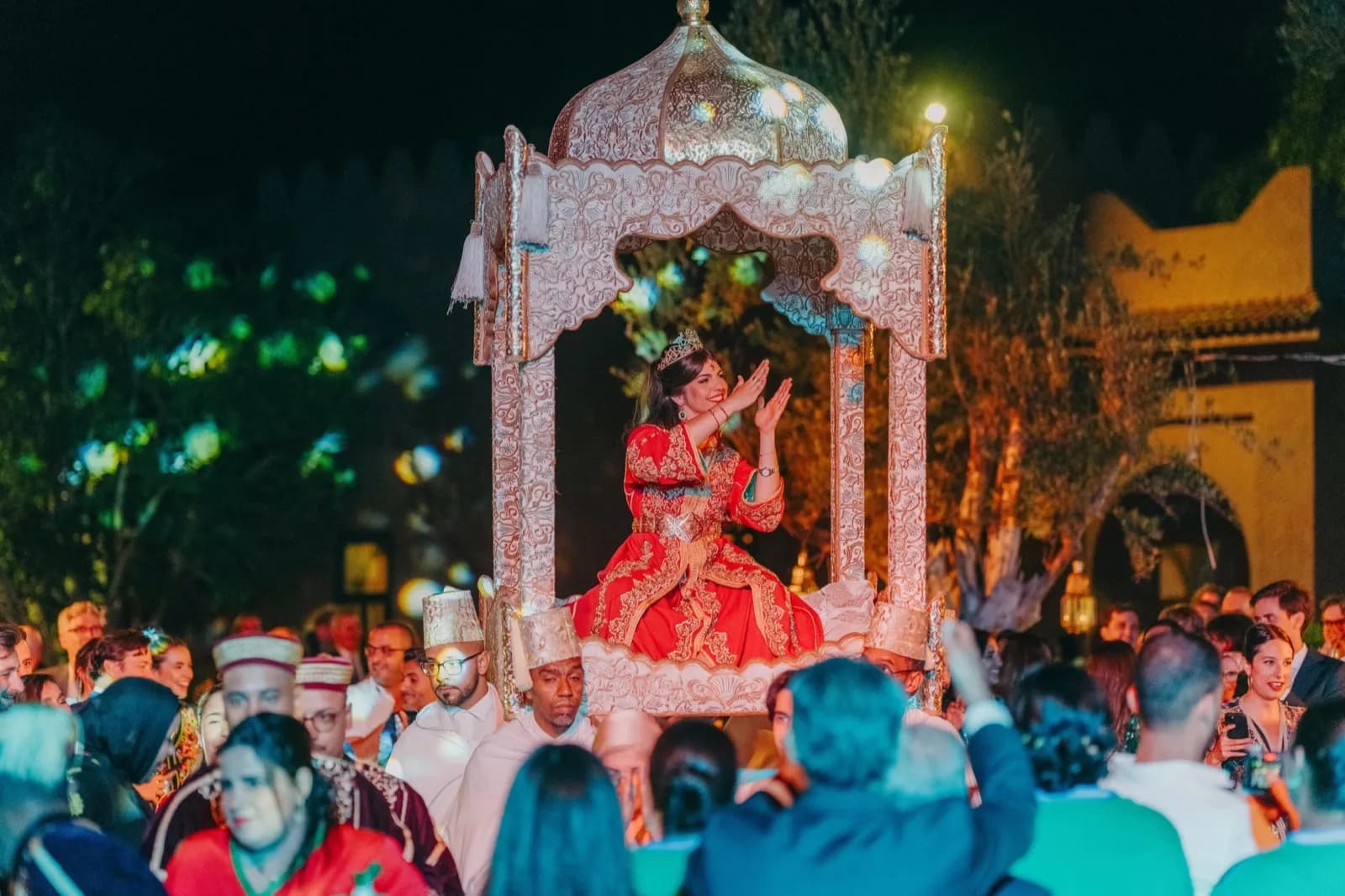
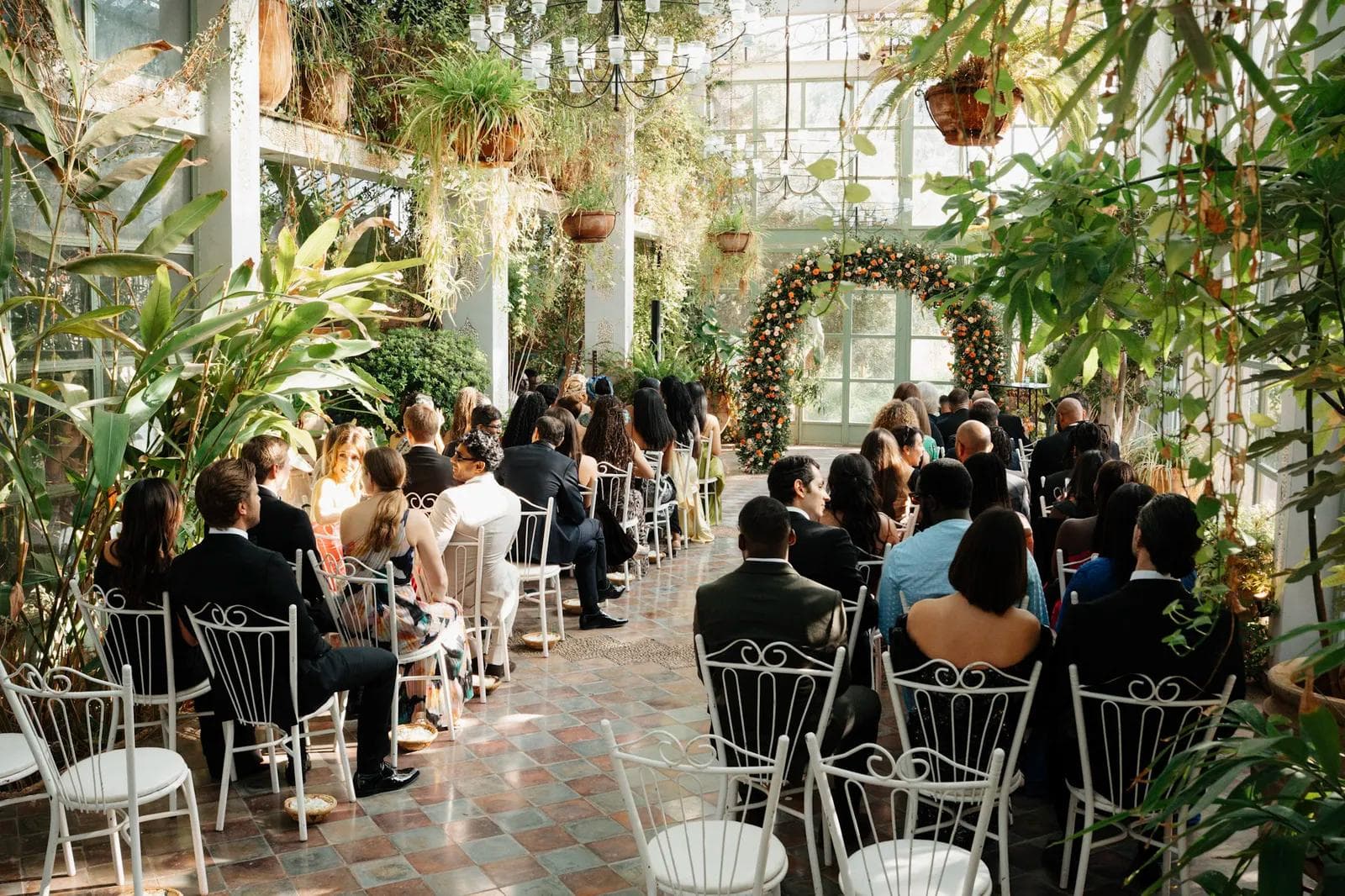
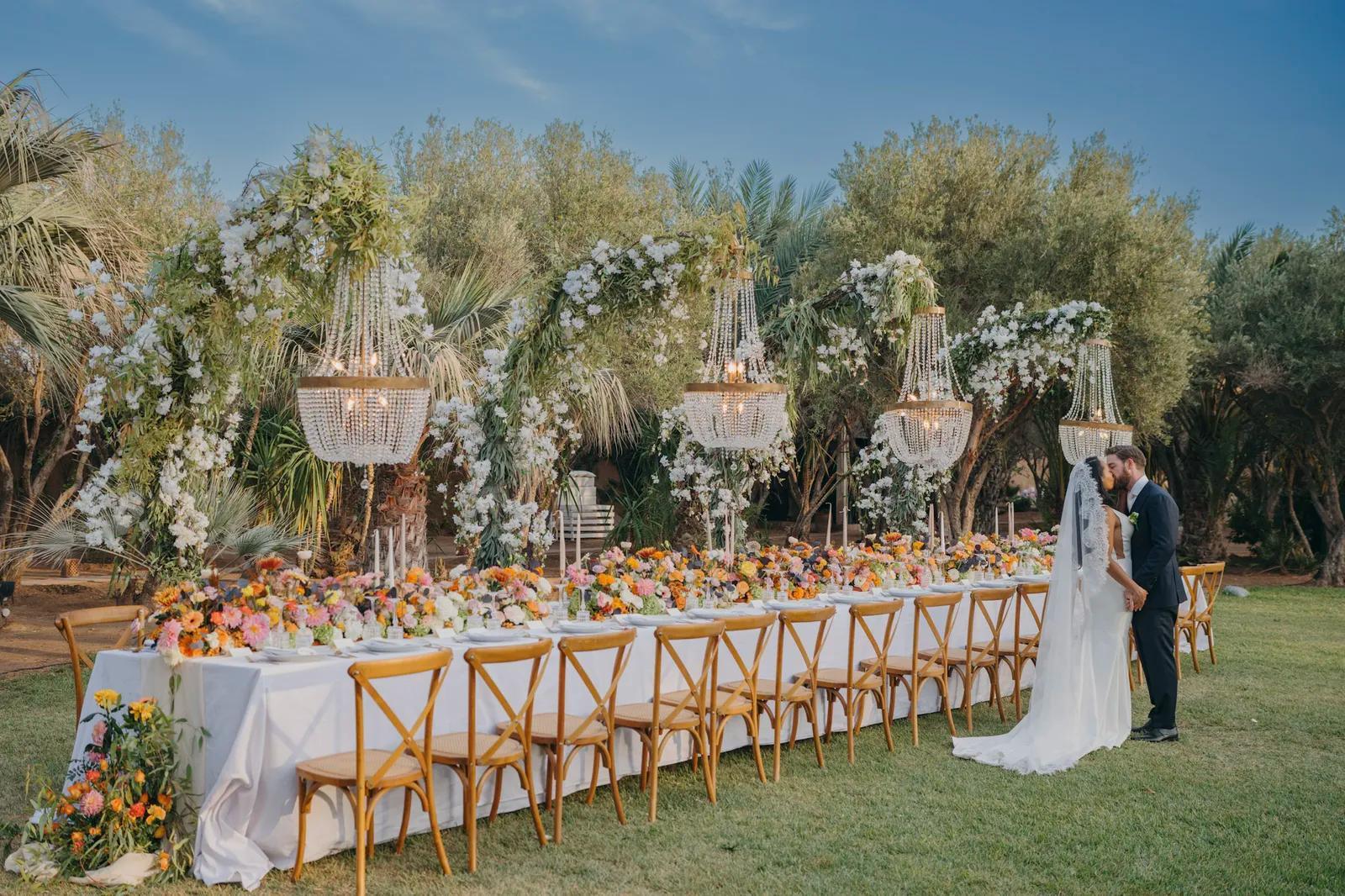
In practice, legal marriage in Morocco is generally out of reach for couples without a Moroccan spouse. So most of our couples sign the paperwork at home and hold a symbolic ceremony in Marrakech. AMÉLIE plans that ceremony from the venue search to the day itself, and you can talk it through with us on a 30-minute call.
Our full guide covers the legal steps for marrying in Morocco by nationality, including the rare cases where it is possible, and a second article explains how a civil or symbolic ceremony works for foreign couples.
For those who do marry legally there, GOV.UK sets out the steps. British nationals living in the UK need a certificate of no impediment from a UK register office. Those living abroad need a marital status affirmation (£50) and a certified passport copy (£25). The documents must be legalised by Morocco's Ministry of Foreign Affairs and translated into Arabic for the court, and you must marry within 3 months of getting the affirmation (GOV.UK).
British guests can visit Morocco without a visa for up to 90 days for tourism, and their passport must be valid for at least 3 months after the date they arrive (GOV.UK). Guests of other nationalities should check their own government's advice.
On insurance, GOV.UK says to buy travel insurance as soon as possible after booking your trip, because emergency medical treatment abroad can cost thousands of pounds. Declare any existing medical conditions, since leaving something out can invalidate the policy, and don't count on a GHIC or EHIC: they are not alternatives to travel insurance (GOV.UK). ABTA also suggests wedding insurance, in case events outside your control affect the ceremony (ABTA).
Still comparing destinations? We've put Morocco side by side with Italy and Greece.
The checklist
Legal side
- Choose your route: a legal wedding abroad, or legal at home and symbolic abroad.
- Check the destination's marriage law for your nationalities, your residency and, if it applies, a same-sex union.
- UK: use the GOV.UK service to find out which document proves you're free to marry.
- France: contact the French consulate covering the venue several months ahead about the CCAM.
- Order recent birth certificates: French consulates set a maximum age (3 or 6 months, depending on where you were born).
- Allow for official translations and legalisation if the country asks for them.
- Marrying at home: give notice at least 29 days ahead (England and Wales) or file your dossier at the mairie (France).
- France: hold the civil wedding before any religious ceremony.
- After a legal wedding abroad: get your certificate, translate it, and (French citizens) request transcription.
Wedding side
- Pick a season. Our guide to the best month to marry in Marrakech goes through the year.
- Set a budget by guest count, using our real Marrakech wedding budgets.
- Shortlist venues by style and size with our guide to Marrakech wedding venues.
- Buy travel insurance when you book, and consider wedding insurance too.
- Decide who manages suppliers on the ground, and how you'll make decisions from home. At AMÉLIE, a lead planner is your main contact from the first call to the wedding day and joins every venue visit, supplier meeting and tasting with you by video, with photos and samples in your inbox the same week. Book an introduction call to see how it works.
Guest side
- Send the date out early. Guests at a wedding abroad need several days off work, flights and somewhere to stay, so the more notice they get, the more of them can come. ABTA's advice is to let people know well in advance so they can plan (ABTA).
- Find rooms near the venue at a few different price points, so every guest has an option that suits them. Hotels, transfers, dietary needs and late arrivals are part of the guest experience AMÉLIE plans.
- Check your guests' passports and entry rules.
- Book flights in the name on the passport you'll travel with. GOV.UK is clear that the name on your passport must match the one you use when you book (GOV.UK).
- If you change your name after a register office wedding, don't book until the new passport arrives: it won't have the same number as the old one (GOV.UK). Otherwise, travel on your current passport and leave the name change until you're home.
FAQ
Is a wedding abroad legally recognised in the UK?
Yes, if it was lawful in the country where it took place and would be allowed under UK law. You won't get a UK certificate unless it was a consular marriage at a British embassy, consulate or high commission (GOV.UK).
Can two British people get legally married in Morocco?
Not under the rules GOV.UK publishes, which say a British national's partner must be a Moroccan national (GOV.UK). Most couples marry at home and hold a symbolic ceremony in Marrakech.
Does a French citizen need a CCAM to marry abroad?
Yes, when the marriage is celebrated by a foreign authority. You apply to the French embassy or consulate covering the place of the wedding, and the certificate is issued after the banns if the marriage meets French law (Service-Public).
Do I need insurance to get married abroad?
Travel insurance, yes: GOV.UK advises buying it as soon as you book and says a GHIC or EHIC doesn't replace it (GOV.UK). ABTA also recommends wedding insurance (ABTA).
Do French couples have to transcribe a marriage celebrated abroad?
It isn't compulsory, but it is recommended, and there's no deadline. Transcription gives you a French livret de famille (Service-Public).
How far ahead do we need to give notice to marry in England?
At least 29 days before the ceremony, and the ceremony must take place within 12 months (GOV.UK).
Planning your wedding in Marrakech
Once the legal side is settled, AMÉLIE takes care of the rest. We're a full-service destination wedding planning studio, with a team in Marrakech since 2022 and more than 120 weddings planned. We work in English, French and Arabic. Venue visits, supplier meetings and tastings happen by video, so you can decide without flying in.
You're paired with a lead planner who stays your main point of contact from the first call to the wedding day. We take no commissions and no kickbacks from suppliers. After a discovery call, if we're a good fit, you'll receive a written proposal within a week.
Book a 30-minute introduction call, or start with our complete guide to getting married in Marrakech.
Amélie
Wedding planner based in Marrakech, helping couples create their dream day with Moroccan soul and refined elegance.